




Technical References
Curcumin as a potential non-steroidal contraceptive with spermicidal and microbicidal properties.
Curcumin as a potential non-steroidal contraceptive with spermicidal and microbicidal properties.
Abstract
OBJECTIVE: Curcumin, a component of the curry powder turmeric, has immense biological properties, including anticancer effects. The objective of this study was to determine if curcumin can provide a novel non-steroidal contraceptive having both spermicidal and microbicidal properties.
STUDY DESIGN: The effect of curcumin, with and without photosensitization, was examined on human sperm forward motility and growth of several aerobic (n=8) and anaerobic bacteria (n=4) and yeast (n=7) strains implicated in vaginosis, vaginitis, and vaginal infections in women. The effect of various concentrations of curcumin on human sperm and microbes (aerobic and anaerobic bacteria and yeast) was tested. The effect on sperm was examined by counting the sperm forward motility, and on microbes by agar and broth dilutions and colony counting. Each experiment was repeated using different semen specimens, and bacteria and yeast stocks.
RESULTS: Curcumin caused a concentration-dependent inhibition of sperm forward motility with a total block at ≥250μM concentration. After photosensitization, the effective concentration to completely block sperm forward motility decreased 25-fold, now requiring only 10μM concentration for total inhibition. Curcumin concentrations between 100 and 500μM completely blocked the growth of all the bacteria and yeast strains tested. After photosensitization, the effective concentration to completely inhibit microbial growth decreased 10-fold for aerobic bacteria and yeast, and 5-fold for anaerobic bacteria.
CONCLUSIONS: These findings suggest that curcumin can block sperm function and bacteria/yeast growth. It can potentially provide an ideal non-steroidal contraceptive having both spermicidal and microbicidal properties against vaginal infections.
Copyright © 2014 Elsevier Ireland Ltd. All rights reserved.
Curcumin and Cancer Cells: How Many Ways Can Curry Kill Tumor Cells Selectively?
Abstract
Authors: Jayaraj Ravindran, Sahdeo Prasad, and Bharat B. Aggarwal
Article in full
Cancer is a hyperproliferative disorder that is usually treated by chemotherapeutic agents that are toxic not only to tumor cells but also to normal cells, so these agents produce major side effects. In addition, these agents are highly expensive and thus not affordable for most. Moreover, such agents cannot be used for cancer prevention. Traditional medicines are generally free of the deleterious side effects and usually inexpensive. Curcumin, a component of turmeric (Curcuma longa), is one such agent that is safe, affordable, and efficacious. How curcumin kills tumor cells is the focus of this review. We show that curcumin modulates growth of tumor cells through regulation of multiple cell signaling pathways including cell proliferation pathway (cyclin D1, c-myc), cell survival pathway (Bcl-2, Bcl-xL, cFLIP, XIAP, c-IAP1), caspase activation pathway (caspase-8, 3, 9), tumor suppressor pathway (p53, p21) death receptor pathway (DR4, DR5), mitochondrial pathways, and protein kinase pathway (JNK, Akt, and AMPK). How curcumin selectively kills tumor cells, and not normal cells, is also described in detail.
Elevated Sugar Intake Linked to Significantly Raised Risk of Obesity, Diabetes, and Heart Disease
Author: Dr Mercola
According to a study published in 2013, nearly one in five US deaths is now associated with obesity[1]. Obesity is indeed a marker for chronic and potentially deadly disease, but the underlying problem that links obesity to so many other serious health issues—including heart disease—ismetabolic dysfunction.
Mounting evidence clearly shows that added sugars, and processed fructose[2] in particular, is a primary driver of metabolic dysfunction.
Refined fructose is actually broken down very much like alcohol[3], damaging your liver and causing mitochondrial and metabolic dysfunction in the same way as ethanol and other toxins.
It also causes more severe metabolic dysfunction because it’s more readily metabolized into fat than any other sugar[4]. The fact that refined fructose is far more harmful to your health than other sugars was recently highlighted in a meta-review published in the Mayo Clinic Proceedings.1
The average American consumes one-third of a pound of sugar per day, half of which is processed fructose. Other statistics found in Dr. Richard Johnson’s book, The Sugar Fix,2 suggest about 50 percent of Americans consume as much as half a pound[5], more than 225 grams, per day!
The majority of all this sugar is hidden in processed foods and beverages, so to address obesity and related health issues like diabetes and heart disease, ridding your diet of processed fare is key for success.
Curcumin: an orally bioavailable blocker of TNF and other pro-inflammatory biomarkers.
KEYWORDS:
TNF; TNF blockers; bioavailability; chronic diseases; curcumin; inflammation
- PMID:
- 23425071
- [PubMed – indexed for MEDLINE]
- PMCID:
- PMC3753829
Free PMC Article
Curcumin suppresses the production of interleukin-6 in Prevotella intermedia lipopolysaccharide-activated RAW 264.7 cells
Abstract
Purpose
Curcumin is known to exert numerous biological effects including anti-inflammatory activity. In this study, we investigated the effects of curcumin on the production of interleukin-6 (IL-6) by murine macrophage-like RAW 264.7 cells stimulated with lipopolysaccharide (LPS) from Prevotella intermedia, a major cause of inflammatory periodontal disease, and sought to determine the underlying mechanisms of action.
Methods
LPS was prepared from lyophilized P. intermedia ATCC 25611 cells by the standard hot phenol-water method. Culture supernatants were collected and assayed for IL-6. We used real-time polymerase chain reaction to detect IL-6 mRNA expression. IκB-α degradation, nuclear translocation of NF-κB subunits, and STAT1 phosphorylation were characterized via immunoblotting. DNA-binding of NF-κB was also analyzed.
Results
Curcumin strongly suppressed the production of IL-6 at both gene transcription and translation levels in P. intermedia LPS-activated RAW 264.7 cells. Curcumin did not inhibit the degradation of IκB-α induced byP. intermedia LPS. Curcumin blocked NF-κB signaling through the inhibition of nuclear translocation of NF-κB p50 subunit. Curcumin also attenuated DNA binding activity of p50 and p65 subunits and suppressed STAT1 phosphorylation.
Conclusions
Although further study is required to explore the detailed mechanism of action, curcumin may contribute to blockade of the host-destructive processes mediated by IL-6 and appears to have potential therapeutic values in the treatment of inflammatory periodontal disease.
Keywords: Curcumin, Periodontal disease, Prevotella intermedia, Lipopolysaccharides, Interleukin-6
Curcumin Suppresses T Cell Activation by Blocking Ca2+ Mobilization and Nuclear Factor of Activated T Cells (NFAT) Activation
Christian Kliem,‡ Anette Merling,§ Marco Giaisi,§ Rebecca Köhler,§ Peter H. Krammer,§ and Min Li-Weber§,1
Full article
Abstract
Purpose
Curcumin is known to exert numerous biological effects including anti-inflammatory activity. In this study, we investigated the effects of curcumin on the production of interleukin-6 (IL-6) by murine macrophage-like RAW 264.7 cells stimulated with lipopolysaccharide (LPS) from Prevotella intermedia, a major cause of inflammatory periodontal disease, and sought to determine the underlying mechanisms of action.
Methods
LPS was prepared from lyophilized P. intermedia ATCC 25611 cells by the standard hot phenol-water method. Culture supernatants were collected and assayed for IL-6. We used real-time polymerase chain reaction to detect IL-6 mRNA expression. IκB-α degradation, nuclear translocation of NF-κB subunits, and STAT1 phosphorylation were characterized via immunoblotting. DNA-binding of NF-κB was also analyzed.
Results
Curcumin strongly suppressed the production of IL-6 at both gene transcription and translation levels in P. intermedia LPS-activated RAW 264.7 cells. Curcumin did not inhibit the degradation of IκB-α induced byP. intermedia LPS. Curcumin blocked NF-κB signaling through the inhibition of nuclear translocation of NF-κB p50 subunit. Curcumin also attenuated DNA binding activity of p50 and p65 subunits and suppressed STAT1 phosphorylation.
Conclusions
Although further study is required to explore the detailed mechanism of action, curcumin may contribute to blockade of the host-destructive processes mediated by IL-6 and appears to have potential therapeutic values in the treatment of inflammatory periodontal disease.
Keywords: Curcumin, Periodontal disease, Prevotella intermedia, Lipopolysaccharides, Interleukin-6
Hazards of Sugar
Clinical Scientist Sets the Record Straight on Hazards of Sugar
By Dr. Mercola
Dr. Richard Johnson is the head of nephrology at the University of Colorado and is actively engaged in clinical research. Over the past 25 years,much of his research (which is funded by the National Institutes of Health) has focused on fructose and obesity-related diseases.
Not only has he published some 500 papers in the peer-reviewed literature, he’s also authored books along the way. His latest book, The Fat Switch, is a really intriguing book that shatters many of our age-old myths about diet and weight loss.
His hypothesis is that, rather than being driven by eating too many calories and lack of exercise, obesity is primarily driven by eating too much refined sugar, particularly fructose. According to Dr. Johnson:
“The conventional wisdom is that people are eating too much and exercising too little. Of course, there’s a lot of evidence that supports that… It’s too much energy in, too little out, and the rest is turned into fat.
This is the law of thermodynamics, and there’s some truth to it. The issue is that when people talk about this, they seem to think that it’s the culture that’s driving obesity…
But what we know is that animals in general will regulate their weight very tightly… In order to gain weight significantly, you actually have to block your sensation of fullness, so that you’re hungry more, and you have to block your energy output. You actually block the ability to oxidize fat to burn fat.”
How Leptin Resistance Causes Obesity
In order for you to significantly gain weight, you must first become leptin resistant. Leptin is a hormone that helps you regulate your appetite.When your leptin levels rise, it signals your body that you’re full, so you’ll stop eating.
However, as you become increasingly resistant to the effects of leptin,you end up eating more. Many people who are overweight also have an impairment in their body’s ability to oxidize fat, which leads to a low-energy state.
The question then is: what drives this basic process? Why do you become leptin resistant in the first place?
Dr. Johnson’s research clearly shows that refined sugar (in particular fructose) is exceptionally effective at causing leptin resistance in animals,and it’s very effective at blocking the burning of fat.
“When you give fructose to animals, they lose their ability to controlt heir appetite, they eat more, and they exercise less. Fructose looks like it’s playing a direct role in weight gain,” he says.
His research also reveals that fructose has effects independent of this mechanism to induce this metabolic syndrome. Whereas fructose increases weight through the standard mechanism of stimulating more food intake and blocking the burning of fat, even when you control caloric intake, fructose can affect body composition.
This is because when you eat fructose, you actually generate more fat in your liver for the same amount of energy intake, compared to other types of sugar… For example, if you calorically restrict an animal but give it a high-fructose diet or a high-sugar diet, it will still produce fatty liver and will still become insulin resistant.
According to Dr. Johnson,fructose has two effects:
1. It stimulates weight gain through its effects on your appetite and by blocking the burning of fat
2. It also changes your body composition to increase body fat even when you are on a caloric restriction
Fruits… Are You Eating Too Much of a Good Thing?
Most overweight Americans have some degree of insulin and leptin resistance. This also includes people with diabetes, and many individuals with high blood pressure or high cholesterol.
If you fall into this category, it would be prudent for you to restrict your fructose consumption to about 15 to 25 grams of fructose per day from all sources.
Those who are normal weight and relatively healthy may also benefit from reducing their intake of fructose, particularly from foods containing high fructose corn syrup or sugar, as the effects of high sugar and HFCS intake may have effects that build up over time.
Naturally, fruits also have fructose but contain many beneficial nutrients and anti-oxidants. For someone who is obese, one has to be careful with eating fruits that have substantial fructose content. Some fruits, such as lemons and limes, have minimal fructose content and are safe.
Other fruits, such as grapefruit, kiwi, and berries, also have relatively low fructose content and high levels of nutrients. However,fruit juices, dried fruits, and some fruits that are rich in fructose (such as pears, red apples, and plums) should be eaten relatively sparingly. Dr. Johnson explains:
“Most animals will regulate their weight very carefully. They even regulate it in a seasonal way. Towards the fall and before winter, many animals will gain weight, particularly animals that hibernate. They will dramatically increase their fat. A lot of them do so by actually becoming leptin resistanta nd by blocking their ability to oxidize fat.
It’s the same mechanism that we see in people who are getting fat except these animals are doing it purposely in preparation for hibernation. It’s a survival advantage.
Normally, a natural fruit is also a source of fructose. But most natural fruits have relatively small amounts of fructose, like four to eight grams. If you eat a lot of fruit, that could be an issue. But they also often have a lot of things that are very healthy, like antioxidants, flavonols, and so forth.
We’ve actually discovered that many of these compounds in natural fruit can counter some of the effects of the fructose. So when you have a fruit that has a small amount of fructose, oftentimes the good components in the fruit can keep it neutralized.”
Interestingly, as a fruit ripens, the sugar content goes up while many of the antioxidants and other beneficial nutrients go down—and animals appear to instinctively know this. Bears, for example, will eat huge amounts of berries in the fall to fatten up. It’s worth keeping this in mind, as the fructose in fruit can add up quickly if you eat a lot of it.
“There was just a paper published in the British Medical Journal, which looked at individual fruits as a risk factor for obesity and diabetes,” Dr. Johnson says. “Certain fruits, which we know have relatively low-sugar content and very high vitamin and antioxidant contents,are actually quite healthy. Berries, in particular blueberries, are very, very healthy.
But juices, where you put all the fruit together and you get a lot of sugar in one glass, it’s just too much. When you drink that, you can flood your liver with fructose, and then that will overwhelm the benefits of all the antioxidants. You’ll still get an increased risk for fatty liver, obesity, and diabetes from fruit juice.”
Obesity Increases Your Body’s Absorption of Fructose
Another interesting tidbit is that if you’re insulin resistant and obese, it doesn’t take much fructose to activate the processes that will keep you fat. Some of Dr. Johnson’s most recent research shows that the more high-fructose corn syrup you eat, the more you absorb and the more you metabolize it. Thus, eating fruits may be more of an issue if you are insulin resistant, whereas fruit intake is likely safer or even beneficial if you are lean and healthy.
This helps explain the paradox of how some very fit people can eat a lot of fruit without gaining any weight. I’m not insulin resistant, and when I decided to play around with adding some extra fruit to my diet on strength training days, I actually lost five pounds, which to me didn’t make sense at first, since fructose should do the opposite. Part of that may be related to the fact that my body was optimized to burn fat as my primary fuel,as I was regularly practicing intermittent fasting.
According to Dr. Johnson, if you exercise regularly, a small amount of fructose can actually be quite beneficial, because the fructose will accelerate glucose absorption in your gut and improve muscle performance. But it really depends on how your body metabolizes the fructose. Your body normally cannot absorb fructose well. But the more fructose you eat, the more the transporters that allow for fructose uptake in your gut are turned on.Hence, the more fructose your body will absorb. Lean children tend to only absorb about half of the fructose they consume, whereas obese children who have fatty liver disease absorb close to 100 percent.
“Not only that – the kids with fatty liver, we’ve previously shown that they have high levels of enzymes in their liver that metabolize the fructose.Not only did they absorb more, but they metabolized it more effectively. This is a problem,” he says.
The Power of Intermittent Fasting
Intermittent fasting is a powerful tool to help you resolve your insulin and leptin resistance. It’s also one of the fastest ways to shed excess pounds,as it helps shift your body from burning sugar to burning fat as its primary fuel. To me, the most remarkable aspect of intermittent fasting is that once you make the transition, your hunger and cravings for sweets virtually disappears.
Granted, in order to get it right, you need to severely restrict your sugar or fructose intake. A healthy diet becomes all the more important when you start intermittently fasting. Ideally, you’ll want to swap your non-vegetable carbs for healthful fats. Most benefit from anywhere from 50 to 70 percent of their daily calories in the form of healthful fat, such as avocado, olives, butter, nuts (I prefer macadamia and pecans), and coconut oilfor example.
When it comes to protein, Dr. Johnson agrees that most people could benefit from cutting down on animal protein, especially those high in purines,such as shrimp and lobster. According to Dr. Johnson, a high animal protein diet can accelerate kidney disease, and this appears to be a result of the purines. The following infographic offers a quick review of the basics of intermittent fasting. For a more in-depth review, please see this previous article.
Exercising while fasting can further boost results. A simple way of doing this is to exercise in the morning, and skipping breakfast. As explained by Dr. Johnson:
“If you exercise at night, you’re basically burning primarily your glycogen and carbohydrate stores. You don’t actually burn too much fat. But if you exercise in the morning, you burn more fat than carbohydrates.
The question is why? The reason is that as soon as you quit eating,you’re burning the carbohydrates in your liver. It takes about eight to 10 hours for the glycogen to be completely depleted. What happens is that every time you get a good night’s sleep, during that time your body is burning off the carbohydrates. In the morning, you are basically in a low-carbohydrate state, and you’re now burning fat. That’s why exercising in the morning burns more fat, because you don’t have the big carbohydrate stores.”
If you need to eat a little in order to exercise, make sure to avoid all sugars and carbs. That means no bread products or juices, for example.Essentially, you want to carbohydrate-restrict completely in the morning, in order to allow your body to keep burning fat instead of sugar. As noted by Dr.Johnson, another “trick” to really making intermittent fasting work for you is to restrict most all your non-veggie carbs to a very short period of time each day (typically dinner). He recommends restricting your carb consumption to a window of just two hours per day.
Exercise Stimulates Your Body’s Energy Production
Exercise is really important in this entire process. Not only does it help burn off fat; it also stimulates your mitochondria. Mitochondria are the “power stations” inside your cells that produce the energy that drives your body. As explained by Dr. Johnson, sugar and obesity are both associated with a decrease in the energy levels in your cells, because of the adverse effects sugar has on your mitochondria. Over time, obese people actually lose mitochondria. There are only three factors that stimulate mitochondria really well, according to Dr. Johnson, and those are:
1. Exercise
2. Vitamin C (it even helps block some of the adverse effects of sugar. Dr. Johnson recommends getting about 500 mg of vitamin C per day)
3. Dark, raw chocolate,high in flavonols
Uric Acid as a Marker for Fructose Toxicity
Dr. Johnson promotes using your uric acid level as a marker for fructose toxicity, which we’ve discussed at some length in aprevious interview. Interestingly, for whatever reason, I have a relatively high baseline uric acid level. It’s above Dr. Johnson’s ideal recommendation of 5 or less. Mine’s typically closer to 6.When I implemented intermittent fasting and eliminated most carbs from my diet,replacing them with high quality fats, my uric acid shot up closer to 8. Still,I have no symptoms of gout or other uric acid-related issues. I often wondered if perhaps it was a complication of intermittent fasting, however according to Dr. Johnson, such an effect is fairly normal when you first start fasting and become ketotic.
“We don’t really know why. It might be a compensation mechanism. But it does come down over time under a ketotic diet,” he says.
That said, uric acid is a very strong predictor for developing obesity,diabetes, insulin resistance, and fatty liver. If you have a high-serum uric acid—7 or higher—your risk for developing diabetes, hypertension, obesity, and metabolic syndrome is significant.
Why Many Need General Carb Restriction in Addition to Restricting Fructose
Dr. Johnson recently published a paper in the peer-reviewed journal Nature Communications, showing that restricting fructose may not be enough if you’re severely overweight or obese. General carb restriction may also be needed in such cases. The reason for this is that restricting carbs allows you to burn off glycogens. But Dr. Johnson’s team has also made another significant discovery, which explains why general carb restriction is necessary for those struggling to shed excess pounds:
“We’ve recently had another discovery: carbs like glucose or flour and bread may be able to cause metabolic syndrome in their own right, but it’s through fructose. How does that work? What we did is we fed animals glucose. That’s a different sugar. There’s no fructose in it. It’s what’s present in flour and bread. When we fed mice a high-glucose diet,to our amazement, they actually over time started to develop fatty liver,insulin resistance, obesity, and all those bad things.
When we studied them, we found that they were converting some of the glucose to fructose in their liver. Even though they weren’t eating fructose,they were able to use the white flour and the glucose that they eat to convert it to fructose in their body.
We then used special mice that cannot metabolize fructose. They are lean, healthy machines. When we gave them glucose, they did not get fatty liver and they did not get insulin resistance. We could show that the mechanism by which carbs are causing fatty liver is actually still through fructose.”
So, the bottom line is that this is another argument for avoiding bread,rice, and other non-vegetable carbs—especially if you are insulin resistant. If you’re trying to lose weight, restricting carbohydrates will your body to burnfat better, and prevent fructose from being formed in your liver.
The Difference Between High Fructose Corn Syrup and Table Sugar
According to Dr. Johnson, most of the fructose you get comes from table sugar, which is sucrose, and from high-fructose corn syrup. Whole fruits actually play a minimal role in the amount of fructose most people eat Dr.Johnson explains:
“Sucrose is table sugar. It comes from sugar cane and sugar beets. It’s a molecule of glucose and fructose that are bound together in what we call as disaccharide. But basically, the glucose and fructose are bound together. One gram of sucrose is half a gram of fructose.
High-fructose corn syrup is a mixture of fructose and glucose that are mixed freely together. The ratio can vary. Usually, like in soft drinks, the amount of fructose is higher than the amount of glucose. It’s typically 55 percent fructose and 45 percent glucose. A recent study showed that the industry sometimes adds even more fructose in soft drinks; a lot of times it’s 60 percent or 65 percent. It’s really quite a significant amount of more fructose than you see with table sugar.”
There are important differences between these two types of sugars. Dr.Johnson’s team has done studies comparing the metabolic effects of fructose and sucrose, finding that high-fructose corn syrup causes greater increases in fructose blood levels, higher uric acid rise, and a higher rise in blood pressure. The unbound form of fructose also causes more fatty liver disease in animals than the bound form found in sucrose.
“The bottom line is it looks like high-fructose corn syrup is different from sucrose,” he says. “It looks like it is worse.But both of them are major sources of fructose. You don’t really want to switch from high-fructose corn syrup to table sugar; you want to reduce both. But in terms of effects, they are different. I believe high-fructose corn syrup is biologically worse than sugar.”
Understand the Ramifications of a High-Fructose/High-Carb Diet
People everywhere are finally waking up to the indisputable fact that all sugars are not created equal when it comes to the physical end results they create. Again, part of what makes fructose so unhealthy is that it is metabolized by your liver to fat in far more rapidly than any other sugar. But recent research also reveals that, if you are overweight or obese, your liver tends to convert some of the glucose you consume into fructose, even if you’re not eating fructose primarily from sources such as HFCS or sugar.
What this means is that if you are overweight, or insulin and leptin resistant, you likely need to restrict not only fructose from your diet in order to shed the excess weight, but other non-vegetable carbohydrates (such as potatoes, rice, and grains) as well. In addition to that, maintaining a regular eating schedule can be very helpful. Personally, I believe there is good reason to consider a scheduled eating or intermittent fasting program. There is an emerging consensus that narrowing the window of time that you consume food may have enormous health benefits and also help you reduce your percentage of body fat.
I’ve revised my own eating schedule to eliminate breakfast and restrict the time I eat food to a period of about six to seven hours each day, which is typically from noon to 6 or 7 pm for the majority of days. This still gives me a net fasting time of 17-18 hours a day. However,about 25 percent of the time I am traveling, so I’m more liberal on those days.Additionally, when I am at my ideal body weight, I will have fruit immediately before or after a workout. To learn more, please see my previous article, “The Power of Intermittent Fasting.”
Piperine In Black Pepper Increases Bioavailability Of Beneficial Turmeric Compounds by 2000%
Why is Coconut Oil Good For You? The Healthiest Oil for Cooking
Coconut oil is one of the richest sources of saturated fat you can find, with around 90% of calories as saturated fat.
Turmeric – the Golden Spice of Life
Synopsis of Turmeric’s Healing Properties
Besides flavoring food, to purify the blood and skin conditions remedy is probably the most common use of Turmeric in Ayurveda.
- The main organs that turmeric treats are the skin, heart, liver and lungs.

- Turmeric is used for epilepsy and bleeding disorders, skin diseases, to purify the body-mind, and to help the lungs expel Kapha.
- Activities of Turmeric include: Alterative, analgesic, antibacterial, anti-inflammatory, anti-tumor, anti-allergic, antioxidant, antiseptic, antispasmodic, appetizer, astringent, cardiovascular, carminative, cholagogue, digestive, diuretic, stimulant, and vulnerary.
- Therapeutic uses of Turmeric: Anemia, cancer, diabetes, digestion, food poisoning, gallstones, indigestion, IBS, parasites, poor circulation, staph infections, and wounds.
- Turmeric helps to regulate the female reproductive system and purifies the uterus and breast milk, and in men it purifies and builds semen, which is counterintuitive for a pungent bitter.
- Turmeric reduces fevers, diarrhea, urinary disorders, insanity, poisoning, cough, and lactation problems in general.
- Turmeric is used to treat external ulcers that respond to nothing else. Turmeric decreases Kapha and so is used to remove mucus in the throat, watery discharges like leucorrhea, and any pus in the eyes, ears, or in wounds, etc.
- In Ayurvedic cooking, turmeric is everywhere, this multifaceted wonder spice helps
- Detoxify the liver
- Balance cholesterol levels
- Fight allergies
- Stimulate digestion
- Boost immunity
- Enhance the complexion
It is also an antioxidant Ayurveda recognizes turmeric as a heating spice, contributing bitter, pungent and astringent tastes.
Turmeric and warfarin
Non refereed comment
Herbal supplements we take can interact with certain drugs. It is thus very important to know about these interactions before you start taking *any* supplements. Warfarin is a drug taken to treat blood clots. It goes by the brand name – Coumadin and is called an anticoagulant medication or blood thinner. Blood clots can form due to pulmonary embolus or deep vein thrombosis. Warfarin works to treat such clots and prevent further clots from forming in the body, therefore reducing the risk of a heart attack or stroke. People who suffer from atrial fibrillation, irregular heart rhythm, have undergone surgeries for knee or hip replacement, suffered a recent heart attack or had a heart valve replacement are more at risk of developing blood clots.
Warfarin is recommended to such patients to help with smooth flow of blood and inhibiting the production of certain clotting proteins in the blood. This drug must be prescribed by a registered medical practitioner. The dosage depends on specific medical conditions. Always inform your doctor about other medications / health supplements you are taking. Some foods or supplements could affect the way warfarin works in the body.
Read more: http://www.turmericforhealth.com/general-info/turmeric-and-warfarin#ixzz3WhG7tNki
Health Benefits of Black Pepper and Turmeric
Health benefits of any food or herb is based on its key active ingredients. Piperine is the key chemical in black pepper. It is similar to capsaicin a chemical in chili and offers many health benefits. Curcumin which is a polyphenol plays the same role in turmeric. Both these compounds have been studied to examine the potential health benefits they can offer individually or together.
The Most Exhaustive Turmeric Research Archive on the Internet: GreenMedInfo.com
WHO calls on countries to reduce sugars intake among adults and children
WHO calls on countries to reduce sugars intake among adults and children
4 MARCH 2015 ¦ GENEVA – A new WHO guideline recommends adults and children reduce their daily intake of free sugars to less than 10% of their total energy intake. A further reduction to below 5% or roughly 25 grams (6 teaspoons) per day would provide additional health benefits.
- >Guideline on sugars intake for adult and children
Free sugars refer to monosaccharides (such as glucose, fructose) and disaccharides (such as sucrose or table sugar) added to foods and drinks by the manufacturer, cook or consumer, and sugars naturally present in honey, syrups, fruit juices and fruit juice concentrates.
“We have solid evidence that keeping intake of free sugars to less than 10% of total energy intake reduces the risk of overweight, obesity and tooth decay,” says Dr Francesco Branca, Director of WHO’s Department of Nutrition for Health and Development. “Making policy changes to support this will be key if countries are to live up to their commitments to reduce the burden of noncommunicable diseases.”
The WHO guideline does not refer to the sugars in fresh fruits and vegetables, and sugars naturally present in milk, because there is no reported evidence of adverse effects of consuming these sugars.
Much of the sugars consumed today are “hidden” in processed foods that are not usually seen as sweets. For example, 1 tablespoon of ketchup contains around 4 grams (around 1 teaspoon) of free sugars. A single can of sugar-sweetened soda contains up to 40 grams (around 10 teaspoons) of free sugars.
Worldwide intake of free sugars varies by age, setting and country. In Europe, intake in adults ranges from about 7-8% of total energy intake in countries like Hungary and Norway, to 16-17% in countries like Spain and the United Kingdom. Intake is much higher among children, ranging from about 12% in countries like Denmark, Slovenia and Sweden, to nearly 25% in Portugal. There are also rural/urban differences. In rural communities in South Africa intake is 7.5%, while in the urban population it is 10.3%.
Reducing sugars intake to less than 10% of total energy: a strong recommendation
The recommendations are based on analysis of the latest scientific evidence. This evidence shows, first, that adults who consume less sugars have lower body weight and, second, that increasing the amount of sugars in the diet is associated with a weight increase. In addition, research shows that children with the highest intakes of sugar-sweetened drinks are more likely to be overweight or obese than children with a low intake of sugar-sweetened drinks.
The recommendation is further supported by evidence showing higher rates of dental caries (commonly referred to as tooth decay) when the intake of free sugars is above 10% of total energy intake compared with an intake of free sugars below 10% of total energy intake.
Based on the quality of supporting evidence, these recommendations are ranked by WHO as “strong”. This means they can be adopted as policy in most situations.
Further reduction to less than 5% of total energy intake: a conditional recommendation
Given the nature of existing studies, the recommendation of reducing intake of free sugars to below 5% of total energy is presented as “conditional” in the WHO system for issuing evidence-based guidance.
Few epidemiological studies have been undertaken in populations with a low sugars intake. Only three national population-wide studies allow a comparison of dental caries with sugars intakes of less than 5% of total energy intake versus more than 5% but less than 10% of total energy intake.
These population-based ecological studies were conducted during a period when sugars availability dropped dramatically from 15kg per person per year before the Second World War to a low of 0.2kg per person per year in 1946. This “natural experiment”, which demonstrated a reduction in dental caries, provides the basis for the recommendation that reducing the intake of free sugars below 5% of total energy intake would provide additional health benefits in the form of reduced dental caries.
WHO issues conditional recommendations even when the quality of evidence may not be strong on issues of public health importance. A conditional recommendation is one where the desirable effects of adhering to the recommendation probably outweigh the undesirable effects but these trade-offs need to be clarified; therefore, stakeholder dialogue and consultations are needed before the recommendation is implemented as policy.
Updating the guideline on free sugars intake is part of WHO’s ongoing efforts to update existing dietary goals to prevent NCDs. The sugars guidelines should be used in conjunction with other nutrient guidelines and dietary goals, in particular those related to fats and fatty acids, including saturated fat and trans-fat.
In March 2014, WHO opened a public consultation on the then draft sugars guideline to seek inputs from all stakeholders. More than 170 comments were received from representatives of government agencies, United Nations agencies, nongovernmental organizations, industries and academic institutions as well as other interested individuals. An expert peer review process was also undertaken in 2014. The final guideline was prepared taking into account comments received from the public consultation and expert peer review.
Countries can translate the recommendations into food-based dietary guidelines that consider locally available food and customs. Additionally, some countries are implementing other public health interventions to reduce free sugars intake. These include nutrition labelling of food products, restricting marketing to children of food and non-alcoholic drinks that are high in free sugars, fiscal policies targeting foods and beverages high in free sugars, and dialogue with food manufacturers to reduce free sugars in processed foods.
Note to editors
Reducing free sugars intake to less than 10% of total daily energy intake was recommended by the WHO Study Group for the first time in 1989 and was further elaborated by a joint WHO/FAO Expert Consultation in 2002. This new updated WHO guideline calls for further reduction of free sugars intake to less than 5% of total energy intake if possible.
Promoting healthy diet was a key theme of the Second International Conference on Nutrition (ICN2) convened jointly by the Food and Agriculture Organization of the United Nations (FAO) and WHO in November 2014. At ICN2, more than 170 countries adopted the Rome Declaration on Nutrition, and a Framework for Action, which highlight the need for global action to end all forms of malnutrition, including obesity and diet-related NCDs.
The sugars guideline is also part of WHO’s effort to reach targets set by the Global Action Plan for NCDs 2013-2020 to halt the rise in diabetes and obesity and reduce the burden of premature deaths due to NCDs by 25% by 2025. Similarly, the sugars guideline contributes to the work of WHO’s Commission on Ending Childhood Obesity, which aims to raise awareness and build momentum for action to address childhood obesity.
- Global action plan for the prevention and control of NCDs 2013-2020
For more information, contact:
Christian Lindmeier
Telephone: +41 22 791 1948
Mobile: +41 79 5006552
E-mail: lindmeierch@who.int
Olivia Lawe Davies
Telephone: +41 22 791 1209
Mobile: +41 79 475 55 45
E-mail: lawedavieso@who.int
Turmeric Found More Effective Than Phenylbutazone
Curcumin reduces acute pain and inflammation better than NSAID phenylbutazone (5)The anti-inflammatory activity of curcumin was evaluated in a group of patients who underwent surgery or suffered from trauma. A double-blind controlled-trial in which three groups received curcumin (400 mg/day), a placebo, or phenylbutazone (100 mg/day) for five consecutive days after surgery. Treatment with curcumin resulted in reduced inflammation more effectively than phenylbutazone. (5)Phenylbutazone is a powerful analgesic (painkiller) and an NSAID (nonsteroidal anti-inflammatory drug). Unlike NSAIDS, which have dangerous side-effects and black-box warnings, curcumin is safe and has no side-effects, even at doses up to 8,000 mg per day
Veterinary nutraceutical medicine – Curcumin
Curcumin, the yellow pigment of Curcuma longa (turmeric), is one of nature’s most potent anti-inflammatory agents. Turmeric and its derivatives have a great deal of pharmacological activity (4). Although a number of components have exerted activity, curcumin is the most potent compound. Curcumin is a powerful antioxidant and has greater effects in preventing free radical damage compared with vitamin C, vitamin E, and superoxide dismutase (5). However, the protective effects that curcumin has against inflammation and joint damage is only partially explained by its direct antioxidant and free radical scavenging effects. Additional mechanisms include enhancement of the body’s natural antioxidant system; increasing the activity of the body’s own anti-inflammatory mechanisms; and exerting direct anti-inflammatory action, acting directly on several enzymes and gene loci (6). Numerous experimental studies have demonstrated that curcumin produces exceptional anti-inflammatory effects (5,6). Curcumin is as effective as cortisone or the potent anti-inflammatory drug phenylbutazone in models of acute inflammation (7). However, while phenylbutazone and cortisone are associated with significant toxicity, curcumin is without side effects. Animals fed very high levels of curcumin (3 g/kg body weight) did not exhibit any significant adverse effects (8).
Source: COMPLEMENTARY AND ALTERNATIVE MEDICINE Can Vet J Volume 41, March 2000
What is Resveratrol and How Does it Work?
Resveratrol (3,5,4′-trihydroxy-trans-stilbene) is a natural compound found in red grape skin, Japanese knotweed (polygonum cuspidatum), peanuts, blueberries and some other berries. It is a powerful antioxidant produced by some plants to protect them against environmental stresses. Antioxidants neutralize free radicals, which are believed to be the cause of aging. Japanese knotweed is the plant source with the highest resveratrol content.
How does Resveratrol work?
Resveratrol protects a cell’s DNA. It is a powerful antioxidant. Antioxidants can help prevent cell damage caused by free radicals. Free radicals are unstable atoms caused by pollution, sunlight and our bodies natural burning of fat that can lead to cancer, aging and brain degeneration.
Chemical composition of essential oils of Turmeric
Chemical Composition of Turmeric
The essential oils of leaves, flowers, rhizomes and roots of turmeric (Curcuma longa L., Zingiberaceae) were analysed by GC-MS. The major constituent of flower oil was p-cymene -8-ol (26%) while leaf oil was dominated by α-phellandrene (32.6%). The rhizomes and roots contained ar-turmerone (31% and 48.8% respectively) as major constituents.
Chemical Composition and Product Quality Control of Turmeric (Curcuma longa L.)
Detailed composition Turmeric
Abstract: Chemical constituents of various tissues of turmeric (Curcuma longa L.) have been extensively investigated. To date, at least 235 compounds, primarily phenolic compounds and terpenoids have been identified from the species, including 22 diarylheptanoids and diarylpentanoids, eight phenylpropene and other phenolic compounds, 68 monoterpenes, 109 sesquiterpenes, five diterpenes, three triterpenoids, four sterols, two alkaloids, and 14 other compounds. Curcuminoids (diarylheptanoids) and essential oils are major bioactive ingredients showing various bioactivities in in vitro and in vivo bioassays. Curcuminoids in turmeric are primarily accumulated in rhizomes. The essential oils from leaves and flowers are usually dominated by monoterpenes while those from roots and rhizomes primarily contained sesquiterpenes. The contents of curcuminoids in turmeric rhizomes vary often with varieties, locations, sources, and cultivation conditions, while there are significant variations in composition of essential oils of turmeric rhizomes with varieties and geographical locations. Further, both curcuminoids and essential oils vary in contents with different extraction methods and are unstable with extraction and storage processes. As a result, the quality of commercial turmeric products can be markedly varied. While curcumin (1), demethoxycurcumin (2), and bisdemethoxycurcumin (5) have been used as marker compounds for the quality control of rhizomes, powders, and extract (“curcumin”) products, Ar-turmerone (99), –turmerone (100), and –turmerone (101) may be used to control the product quality of turmeric oil and oleoresin products. Authentication of turmeric products can be achieved by chromatographic and NMR techniques, DNA markers, with morphological and anatomic data as well as GAP and other information available.
Dietary coconut oil affects more lipoprotein lipase activity than the mitochondria oxidative capacities in muscles of preruminant calves.
Abstract
The presence of coconut oil in a milk replacer stimulates the growth rate of calves, suggesting a better oxidation of fatty acid in muscles. Because dietary fatty acid composition influences carnitine palmitoyltransferase I (CPT I) activity in rat muscles, this study was designed to examine the effects of a milk replacer containing either tallow (TA) or coconut oil (CO) on fatty acid utilization and oxidation and on the characteristics of intermyofibrillar (IM) and subsarcolemmal (SS) mitochondria in the heart and skeletal muscles of preruminant calves. Feeding CO did not affect palmitate oxidation rate by whole homogenates, but induced higher palmitate oxidation by IM mitochondria (+37%, P < 0.05). CPT I activity did not significantly differ between the two groups of calves. Heart and longissimus thoracis muscle of calves fed CO had higher lipoprotein lipase activity (+27% and 58%, respectively; P < 0.05) but showed no differences in fatty acid binding protein content or activity of oxidative enzymes. Whatever the muscle and the diet, IM mitochondria had higher respiration rates and enzyme activities than those of SS mitochondria (P < 0.05). Furthermore, CPT I activity of the heart was 28-fold less sensitive to malonyl-coenzyme A inhibition in IM mitochondria than in SS mitochondria. In conclusion, dietary CO marginally affected the activity of the two mitochondrial populations and the oxidative activity of muscles in the preruminant calf. In addition, this study showed that differences between IM and SS mitochondria in the heart and muscles were higher in calves than in other species studied so far.
Piot C1, Hocquette JF, Herpin P, Veerkamp JH, Bauchart D. J Nutr Biochem. 2000 Apr;11(4):231-8.
Does medium chain triglyceride play an ergogenic role in endurance exercise performance?
ABSTRACT
Because of the medium chain triglycerides (MCT) specific physical and chemical properties, they have been used over the last 40 years in enteral and parenteral nutrition. Results from clinical practice lead some researchers in the early 80’s to use them for ergogenics purposes. The hypothesis was based on the relationship between the oxidation rates of carbohydrate and fat. The increase in fat oxidation would promote glycogen sparing effect, and therefore, delay the time to exhaustion. The aim of the present paper is to review the effects of MCT supplementation upon endurance exercise performance. Most of the studies failed to prove the ergogenic effect of MCT. A few studies that showed the ergogenic effect of MCT administration used alternative experimental designs, such as high MCT dose (above from the previous established limit) or infusion. The chronic use of MCT by athletes is new and few studies have been done in this matter. These few studies showed controversial results. There is a strong tendency in the literature that MCT is not a viable strategy to increase performance during endurance exercise. The aim of this study is to discuss the effects of MCT use on endurance exercise.
Rodrigo Vitasovic GomesI; Marcelo Saldanha AokiI, II
Revista Brasileira de Medicina do EsportePrint version ISSN 1517-8692
Medium Chain Triglycerides (MCTs)Beneficial Effects on Energy, Atherosclerosis and Aging
Medium Chain Triglycerides (MCTs) are a unique form of dietary fat that impart a wide range of positive health benefits. Nevertheless, the potential anti-aging properties of MCTs have been largely unrecognized by many life extension enthusiasts. Dietary fats are molecules composed of individual carbon atoms linked into chains ranging from 2 to 22 carbon atoms in length. Long Chain Fatty acids (LCTs) ranging from 12 to 18 carbons long are the predominant form of fat in the American diet. MCTs, by contrast, are composed of only 6 to 10 carbon links. Because of their shorter chain length, MCTs have a number of unique properties which give them advantages over the more common LCTs.
Until the early 1980s, MCTs were predominantly available only as a constituent of butter, coconut oil, and other natural sources. However, Dr. Vigen K. Babayan of the Nutrition Laboratory, Harvard University, developed a process to produce them in large quantities, to be used primarily for therapeutic uses in a number of conditions. (1)
MCTs, Energy and Exercise
MCTs provide about ten percent fewer calories than LCTs – 8.3 calories per gram for MCTs versus 9 calories per gram for LCTs. But this is just one of the unique advantages of MCTs. (2) More importantly, reduced chain length also means that MCTs are more rapidly absorbed by the body and more quickly metabolized (burned) as fuel (Fig. 1). The result of this accelerated metabolic conversion is that instead of being stored as fat, the calories contained in MCTs are very efficiently converted into fuel for immediate use by organs and muscles.
Fructose Metabolism in Humans
Abstract
Fructose consumption and its implications on public health are currently under study. This work reviewed the metabolic fate of dietary fructose based on isotope tracer studies in humans. The mean oxidation rate of dietary fructose was 45.0% ± 10.7 (mean ± SD) in non-exercising subjects within 3–6 hours and 45.8% ± 7.3 in exercising subjects within 2–3 hours. When fructose was ingested together with glucose, the mean oxidation rate of the mixed sugars increased to 66.0% ± 8.2 in exercising subjects. The mean conversion rate from fructose to glucose was 41% ± 10.5 (mean ± SD) in 3–6 hours after ingestion. The conversion amount from fructose to glycogen remains to be further clarified. A small percentage of ingested fructose (<1%) appears to be directly converted to plasma TG. However, hyperlipidemic effects of larger amounts of fructose consumption are observed in studies using infused labeled acetate to quantify longer term de novo lipogenesis. While the mechanisms for the hyperlipidemic effect remain controversial, energy source shifting and lipid sparing may play a role in the effect, in addition to de novo lipogenesis. Finally, approximately a quarter of ingested fructose can be converted into lactate within a few of hours. The reviewed data provides a profile of how dietary fructose is utilized in humans.
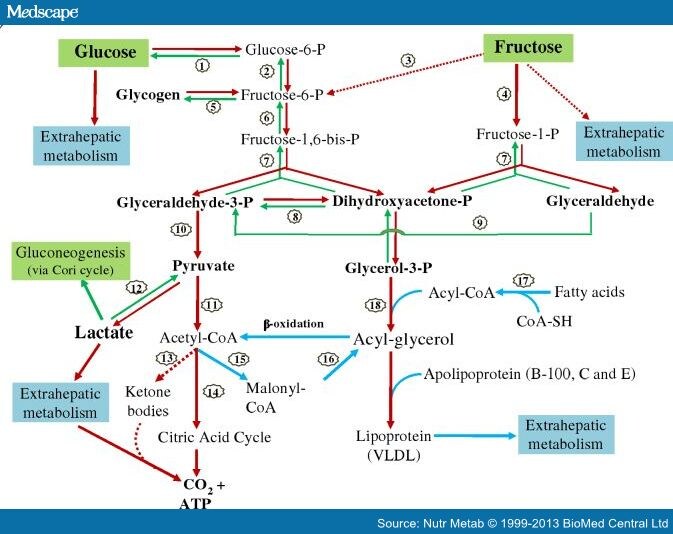
Nutr Metab (Lond). 2012; 9: 89.
Published online 2012 Oct 2. doi: 10.1186/1743-7075-9-89